You merge onto the highway and everything feels fine at 45 mph. Then you settle in around 60 and the steering wheel starts buzzing, or the seat feels like it's humming under you. It may come and go depending on the lane or the road surface, which makes it tough to pin down. A highway vibration is annoying, but it can also be an early hint that something is wearing unevenly.
The good news is that the pattern usually points to the cause.
Why Highway Vibrations Feel Worse At 55 To 75 MPH
Most vibrations get noticeable at highway speeds because the rotation speed magnifies small issues. A tire that's slightly out of round, a wheel with a small bend, or a driveline part with a little play may feel quiet at 35 mph. Once everything spins faster, that same problem can turn into a shake you can't ignore. That's why many drivers notice a "window," like it's worse at 60 to 70 and less obvious above or below that range.
Where you feel it matters too. Vibration in the steering wheel often points toward the front tires, wheels, or steering components. A vibration that feels more like a rumble through the seat can point toward rear tires or driveline parts. If it shows up mainly when you accelerate, you may be looking at a different category than a vibration that happens at a steady cruise.
Tires And Wheels: Balance, Road Force, And Bent Rims
Basic wheel balance is still the number one culprit, especially if the vibration started after a tire change, a rotation, or a pothole hit. Even a small missing wheel weight can do it, and so can packed-in mud on the inside of a rim. Some tires also have stiff spots that create a shake even when the wheel is technically balanced. That's where road-force balancing can be helpful because it measures how the tire behaves under load, not just how it spins in the air.
A slightly bent wheel can create the same feeling and it doesn't always leak air. If you've hit a sharp pothole or clipped a curb, the rim can bend just enough to wobble at speed. Sometimes you can see it on a balancer, and sometimes it shows up as a steady shake that balancing never fully fixes. When the wheel is the issue, the vibration often feels consistent on the same stretch of road.
Uneven Tire Wear And Alignment Clues
Uneven wear can make a balanced tire vibrate. Cupping can create a repeating thrum, feathering can feel like a buzz, and flat spots from sitting can cause a mild shake for the first few miles. You might not notice the wear until you run your hand across the tread and feel a step or roughness. If one tire is wearing faster on the inside or outside edge, that can also change how it rolls at speed.
Alignment can be part of the story, but it's not always the whole story. A toe issue can create feathering, and worn suspension bushings can let alignment angles shift while you drive. That's why a vibration that keeps returning after balancing is a clue to look deeper than weights on a wheel. If the steering wheel is slightly off-center or the car wanders a bit, those details help narrow it down fast.
Brakes, Bearings, And Axles That Add A Shudder
If the vibration shows up mostly while braking, rotors move higher on the list. Even then, the feeling can vary. Some drivers describe a pulsing brake pedal, while others notice a shake through the wheel as they slow from highway speed. A sticking caliper can make this worse by creating heat and uneven wear, which can lead to a vibration that's strongest after a longer drive.
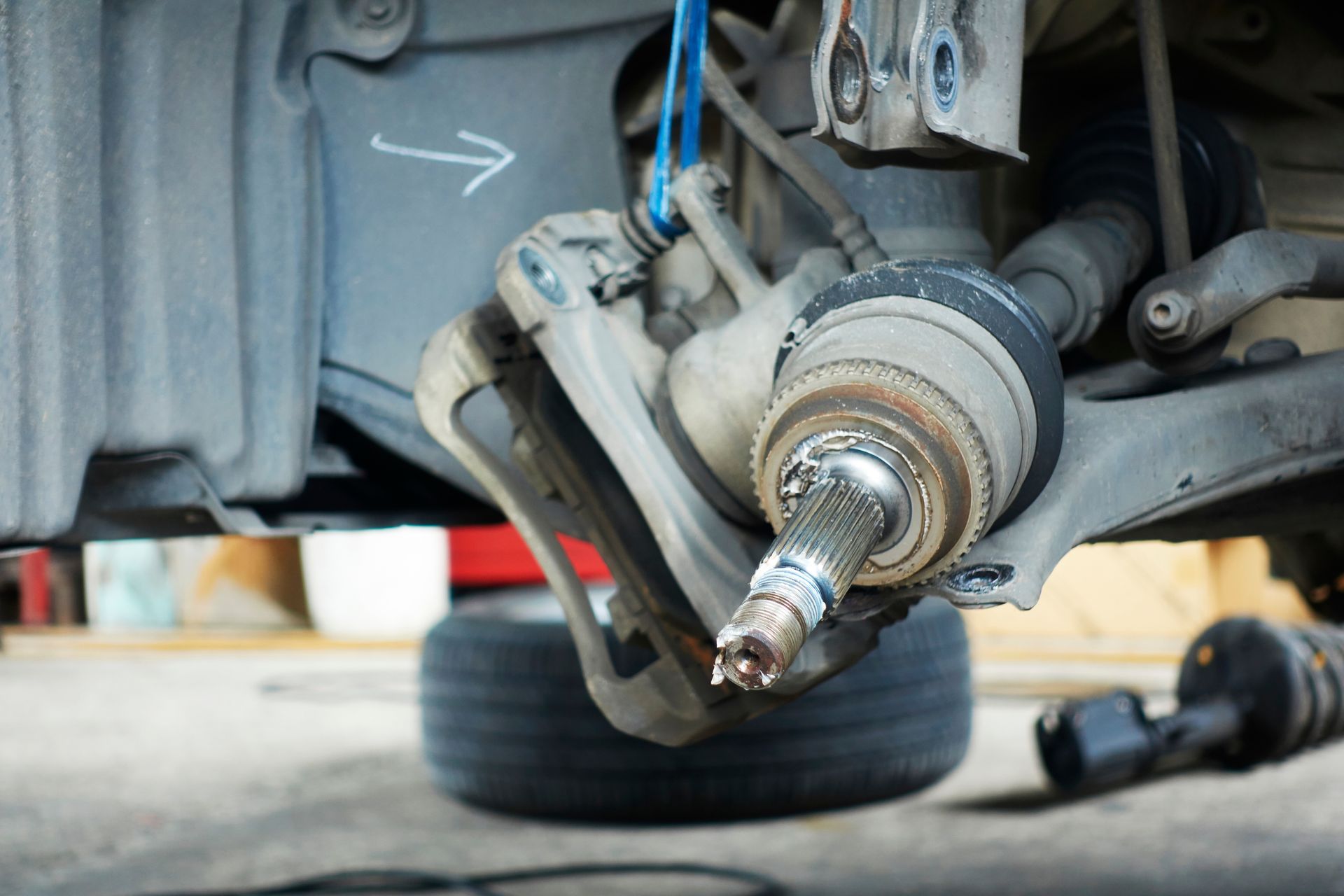
If the vibration is paired with a growl or hum that changes when you gently turn left or right, a wheel bearing becomes more likely. Axles and CV joints can also cause a shake that shows up under load, especially during acceleration. The tricky part is that these issues can overlap with tire symptoms, so the goal is to match the vibration to what you're doing: steady cruise, braking, turning, or accelerating.
Simple Checks Before You Book A Visit
Start by noticing where the vibration is strongest and what triggers it. If it's mainly in the steering wheel, pay closer attention to the front tires and wheels. If it's mainly in the seat, consider the rear tires and anything that rotates behind you. Also note whether the vibration changes on different road surfaces, because that can hint at tire wear patterns that get louder on certain pavement.
Here are a few quick checks that help narrow the cause before you come in:
- Check cold tire pressures and look for one tire that's consistently lower
- Look for uneven tread wear, bulges, or a wobble that suggests a bent rim
- Pay attention to whether braking makes it worse or if it's the same at steady speed
- Think back to recent potholes, curb taps, rotations, or new tires
A lot of highway vibration complaints trace back to tire condition and balance, so staying on top of regular maintenance makes this less likely to pop up unexpectedly. If it still persists after the basics, an inspection is the fastest way to stop guessing and protect your tires.
Get Highway Vibration Repair In Fort Lauderdale, FL With Layton's Garage
Layton's Garage can pinpoint whether the vibration is coming from tire balance, wheel condition, uneven wear, or a worn steering or driveline component, then recommend the most direct fix for your vehicle.
Schedule a visit when you're ready to make highway driving feel steady again.