A dashboard battery warning light can be misleading because it appears to indicate a battery problem right away. Many drivers see the battery symbol and assume the battery itself is weak or dead. Sometimes that is true, but often the real issue is the charging system.
The battery starts the vehicle. Once the engine is running, the alternator has to keep the electrical system powered and recharge the battery. When the warning light comes on, the vehicle is telling you that power is not being managed the way it should.
What The Battery Warning Light Really Means
The battery light usually means the vehicle has detected a charging system problem. It does not automatically mean the battery has failed. The system is watching the voltage while the engine is running. If that voltage drops too low, climbs too high, or becomes unstable, the warning light can appear.
That is why the light can come on while the vehicle is still driving. The battery may still have enough reserve to keep things going for a short time, but if the alternator is not recharging it, that reserve will eventually run out. At that point, the vehicle may stall and fail to restart.
When The Battery Is The Problem
A weak battery can trigger warning signs, especially if it cannot hold a charge or deliver enough power under load. Batteries wear down with age, heat, vibration, short trips, and repeated deep discharges. Many batteries last 3 to 5 years, but some fail sooner depending on use and climate.
A bad battery often shows up during startup. The engine may crank slowly, click, or fail to start after sitting overnight. Lights may dim during cranking, or the vehicle may need a jump start more than once. If the battery is old and fails a load test, replacement may be the right answer.
When The Alternator Is The Problem
The alternator keeps the vehicle powered after startup. If it stops charging correctly, the battery begins carrying the electrical load on its own. That can drain even a healthy battery while you drive.
Alternator problems often show up as dim headlights, flickering interior lights, slow power windows, a battery light on the dashboard, or several warning lights appearing at once. The vehicle may run normally for a few minutes, then start acting strangely as the voltage drops. If the alternator has failed, replacing only the battery will not solve the problem for long.
Bad Connections Can Look Like Battery Or Alternator Trouble
Sometimes the battery and alternator are not the real issue. Loose terminals, corrosion, damaged battery cables, poor grounds, or worn belt components can interrupt charging and starting. A bad connection can make a good battery look weak or make the alternator seem like it is not doing its job.
That is why our technicians check the full circuit before recommending parts. A charging system depends on clean connections, proper belt operation, steady alternator output, and a battery that can accept and hold a charge. Missing one of those checks can lead to the wrong repair.
Why You Should Not Keep Driving With The Light On
If the battery warning light comes on while driving, the vehicle may be running on stored battery power. That can leave you with limited time before electrical systems begin shutting down. Headlights, power steering on some vehicles, ignition, fuel control, and onboard computers all need a stable voltage.
The safest move is to reduce electrical load where possible and have the vehicle checked as soon as possible. If the lights are dimming, the dashboard is flickering, the steering feels different, or the engine starts running poorly, stop driving when it is safe. A charging problem can quickly turn into a stalled vehicle.
How A Shop Tells The Difference
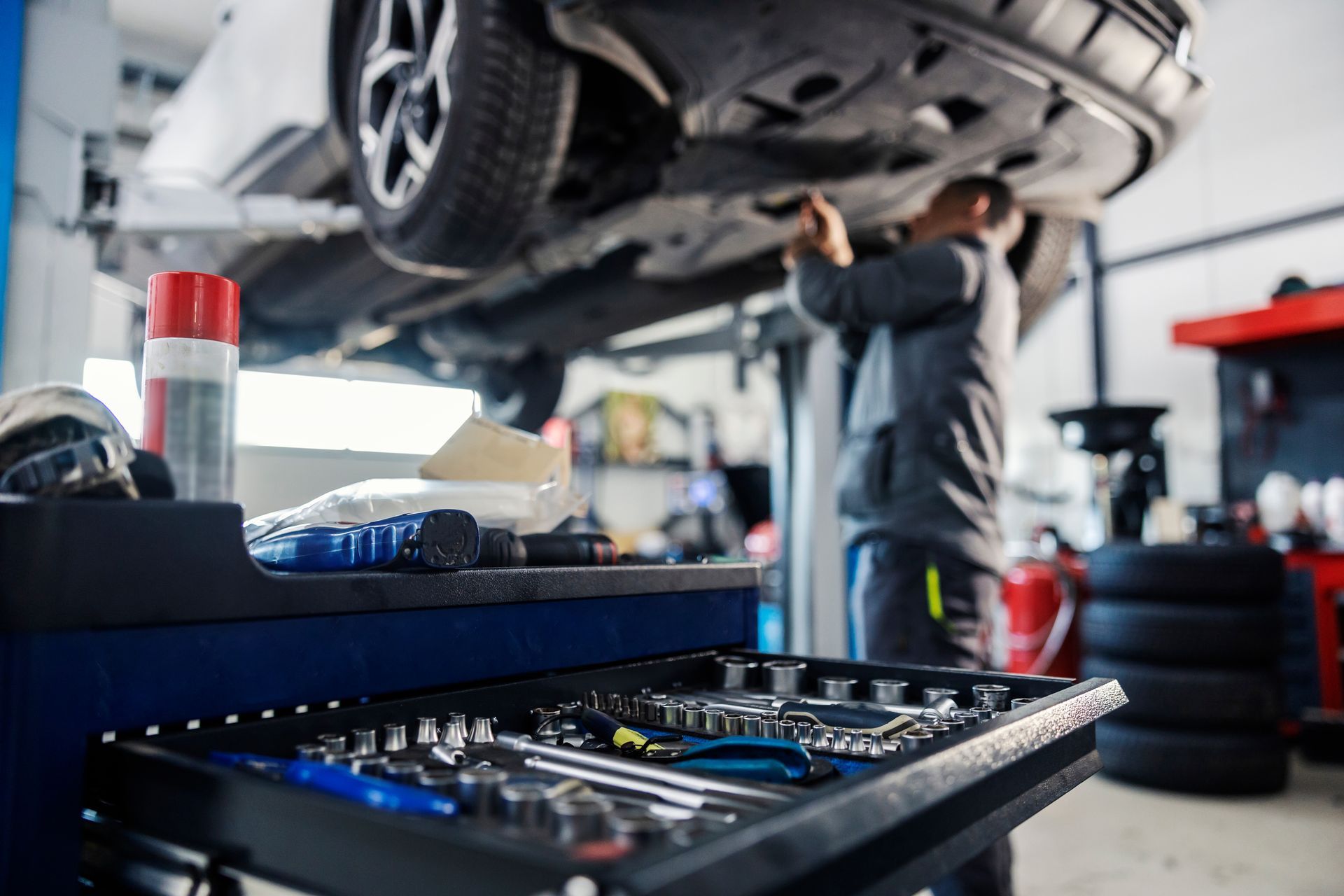
A proper inspection should test the battery, alternator, belt, cables, and grounds together. The battery needs a load test to show whether it still has enough reserve. The alternator needs output testing to confirm whether it is charging correctly under load. The belt and tensioner need to be checked because a slipping belt can reduce alternator performance.
We also look for corrosion, loose terminals, voltage drop, and signs that something is draining the battery while the vehicle is parked. The test results are what separate a dead battery from an alternator replacement, cable issue, or electrical draw.
How Regular Maintenance Helps Prevent Surprise No-Starts
Battery and charging problems rarely happen at a convenient time. Regular maintenance helps catch weak batteries, worn belts, corrosion, and charging concerns before the vehicle needs a jump or stalls on the road. A quick battery and charging system check is especially useful before long trips or when the battery is more than three years old.
If the battery light comes on even once, do not treat it like a random glitch. The warning indicates the vehicle detected a voltage issue. Testing it early gives you a better chance of replacing the right part before the electrical system leaves you stranded.
Get Battery Warning Light Service In Fort Lauderdale, FL, With Layton's Garage
If your battery warning light is on, your vehicle keeps needing a jump, or your lights are dimming while driving, Layton's Garage in Fort Lauderdale, FL, can test the battery, alternator, cables, and charging system to find the real cause.